


Last Updated on August 24, 2026 by TMB
If you’ve tried to make a payment recently, you’ll notice that we now have a myriad of options to do so that require as little interaction or as few steps as possible. Specifically, there has been a massive influx of contactless payment methods.
For consumers, this gives the obvious benefits of greater convenience, more security in some cases, and a seamless experience. For vendors, it means receiving payments faster and greater ease of impulse purchases for their customers. But what exactly are contactless payments, and how do they even work? We are here to break down the mystery.
What Are Contactless Payments?
First, it is worth defining what a contactless payment is. As the name suggests, contactless payment is a form of payment that requires minimal, if any, physical contact by the user. This means no inserting a card, punching in a PIN, using paper money, and so on.
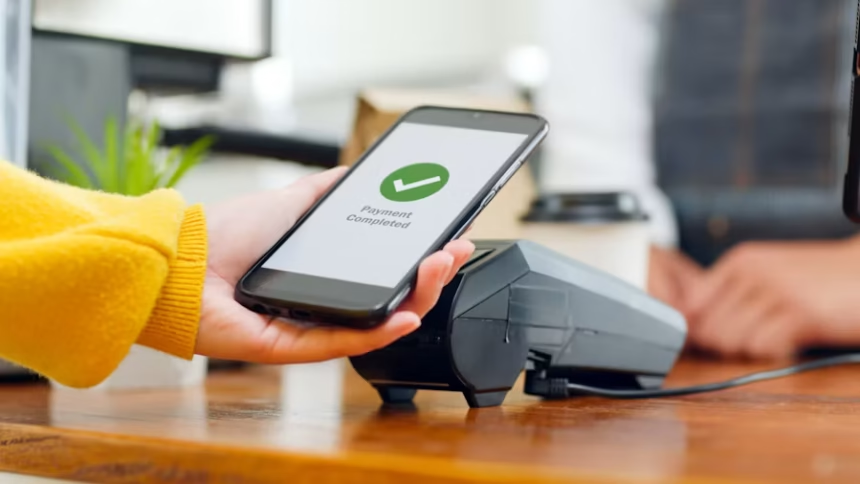
The quintessential form of contactless payment is tapping a card, whether physical or virtual, against a card reader to complete a payment. Examples of contactless payments in person include Apple Pay, Google Pay, and much more.
How Do Contactless Payments Work?
For many people, contactless payments might as well be witchcraft, given how seamlessly they work, and they would suit a little required in our powerful stop in reality; they are powered by several pieces of technology, including microchips within our payment cards, Near Field Communication (NFC) technology, and radio waves.
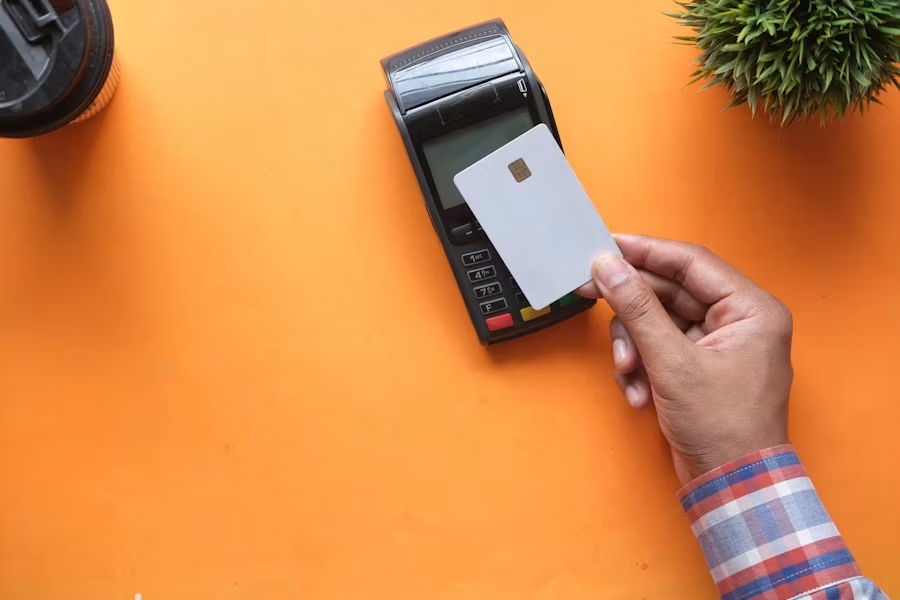
Within every payment card that is optimized for contactless payment, there is both a microchip and a wire loop antenna that can be used to communicate with payment technology. When a card reader is designed to accept contactless payments, it sends a tiny signal to the card in its vicinity using near-field communication technology.
This signal is enough to activate the chip within the card and exchange information with it. The information in question is a one-time payment code that the two machines exchange to confirm/authorise the payment. In this case, your payment card is not telling the machine what your number is or any of your details, but instead confirming via the token that the account attached to it has the funds to honor the purchase and agrees to make a transfer. This is why the amount being charged automatically leaves your account once the contactless payment goes through. Your bank and the point-of-sale technology have essentially agreed to transfer the funds between each other without you having to do much.
Types of Contactless Payments
Contactless payments are all around us these days, and there are several different types to choose from, some of which ours follows
- Contactless Cards: These days, most physical debit and credit cards issued by banks and other financial institutions are contactless by default. This means that up to a certain amount, you can pay by simply tapping your card against a contactless card reader.
- Mobile Wallets: Using your smartphone, you can also connect your accounts and cards and make contactless payments using visual recognition, fingerprint, and much more. These include things like Apple Pay and Google Pay.
- Wearable Devices: Contactless payments are not limited to just mobile phones, as wearable devices like Apple Watches, Fitbits, and even fitness rings are now optimized to allow for contactless payments. This means that even if you don’t have your phone, you can still make payments with ease.
Are Contactless Payments Secure?
As with anything related to money, it’s worth considering the security of contactless payments. The good news is that contactless payments are generally secure, though a few precautions are warranted.
The most obvious concern is a contactless card being used without the owner’s authorization. Last year, there was even a trend in which internet pranksters tricked people into thinking they had collected money from their contactless payments without their consent. Luckily, there are a few ways around this.
First, almost every physical contactless card has a limit. This varies from one financial institution to another and from one user to another, but above a certain amount, you cannot pay via contactless card and will instead have to enter a PIN.
So, there is little risk of someone making thousand-dollar purchases using your contactless card. Also, the majority of financial institutions that issue contactless cards have algorithms that analyze their behavior. If too many purchases are made with the physical card within a certain period, you will be prompted to enter your PIN on your next purchase to confirm that you are using the card. You may also be prompted to use a PIN if you are making an unusual purchase, are outside of your country of residence or if any other activity triggers the algorithm.
Contactless payments are even more secure when they are attached to mobile wallets. Before you make a payment with Apple Pay or Google Pay, you have to confirm your identity via facial recognition, fingerprint scanning, and so on. Thus, payments made using those methods typically have a higher limit, if not no limit. For those concerned about security, this is a good alternative.
Of course, using contactless payments securely will involve keeping your physical card safe, reporting any suspicious behaviour, and freezing payment methods if needed.
Benefits of Going Contactless
Contactless payments are becoming more of the norm, and part of the reason for this is the myriad of benefits they offer:
- Convenience: Anyone who has used contactless payments knows how stress-free it is to simply tap a card and have a payment go through. No punching in PINs or selecting accounts, just a tap and go.
- More Profits for Business: Some businesses that rely on impulse purchases will benefit from contactless payments because customers can make a payment on the spot without overthinking it.
- Easy Access: Using services like Apple Pay or Google Pay means you can access all your payment cards with a single tap. So, there’s no issue of forgetting your credit card at home when you go on holiday or forgetting the PIN for one of your cards while on the go.
Potential Drawbacks
- Security Concerns: While many measures are in place to prevent this, there is always the risk that someone could use your contactless cards to make small purchases without your consent, since they do not need your PIN.
- Forgetting PINs: Many people who use contactless in their day-to-day life report eventually forgetting their PINs because they never have to use them. Compared to traditional card payments that required you to punch in your PIN multiple times a day, contactless payments could lead to this.
How to Use Contactless Payments Safely
If you have any safety concerns about using contactless payments, make sure to follow these steps:
- Set up proper facial recognition and fingerprint settings for your various cards
- Set a healthy limit for your physical cards.
- Keep your cards, devices, PINs, and other sensitive information safe from others.
- Report suspicious activity to your bank or financial institution
Final Thoughts
Contactless payments have become a major part of our world, with billions of transactions completed every single day. And, as we’ve explained in this article, they are not magic but rather an amazing technological innovation that creates convenience for buyers and sellers alike. Make sure to follow some of the tips in this article to make the most of contactless payments while staying safe.