


Last Updated on October 10, 2026 by Domenica
- Best Digital Bank Overall – Up
- Best Paid Account – Revolut (Metal)
- Best Free Account – Up
- Best for Business – Airwalex
- Best for Personal Loans – Alex
- Best for SME Loans – Judo Bank
- Best for Savings Accounts – Up
- Best for Kids – Spriggy
- Best for Metal Cards – Revolut
- Best for International Money Transfers – Wise
- Best for Investing – Revolut
- Best Digital Wallet – Apple Pay
- Other Notable Digital Banks in Australia
- Digital Banks From Big Banks in Australia
- Notable Australian Digital Banks That Shut Down
- Benefits of Australia’s Digital Banks
- Are Australian Digital Banks Safe?
- How to Get Started with Digital Banking in Australia
- More Useful Articles About Digital Banking
- Best Digital Bank Overall – Up
- Best Paid Account – Revolut
- Best Free Account – Up
- Best for Business – Airwalex
- Best for Personal Loans – Alex
- Best for SME Loans – Judo Bank
- Best for Savings Accounts – Up
- Best for Kids – Spriggy
- Best for Metal Cards – Revolut
- Best for International Money Transfers – Wise
- Best for Investing – Revolut
- Best Digital Wallet – Apple Pay
- More Digital Banks in Australia
- Digital Banks From Big Banks
As is the case in the UK and the US, digital banking is on the rise in Australia, with many challenger banks emerging to improve upon the traditional banking approach while making the most of the digital technology that has become integrated into our everyday lives.
We often refer to them as mobile banks, digital banks, online banks, challenger banks, and neobanks. They have scrapped physical branches completely because they’re entirely digital.
Mobile banking apps offer instant access to a well-rounded service, 24/7 in-app customer support, financial advice, and much-needed security features.
Unlike standard banks, neobanks don’t have decades-old infrastructures and systems that would take years to update to new technology, meaning digital banks are updating their services and rolling out new features all of the time to benefit their users in almost real-time.
Several of the banks below also have standalone reviews on our site.
Best Digital Bank Overall – Up

| Pros | Cons |
|---|---|
| No monthly fees | Savings rate drops if you withdraw from a Saver during the month |
| Free overseas purchases | |
| Multiple savings accounts | |
| High interest rate for savings | |
| Home loans |
Up is one of the leading mobile banks in Australia. It also offers an excellent banking account that’s free, doesn’t have a minimum balance, and now even comes with home loans. Yes, that’s right.
Although the app launched only at the end of 2018, it now has more than one million customers. Up is owned by Bendigo Bank, and deposits are covered by the Australian Government’s Financial Claims Scheme up to $250,000.
The app has everything a modern banking account should have, and then some. Apart from a checking account, there are separate savings accounts (Savers) where you can save for a house deposit, car, bills, trips, or whatever you want.
Up’s “Grow & Flow” savings structure rewards untouched savings. Make five card purchases in a month, and Savers you don’t withdraw from earn the Grow rate (5.60% p.a. as of October 2026, on balances up to $250,000). Savers you withdraw from earn the lower Flow rate (2.00% p.a.).
Up also stands out for international travel. You can pay without extra fees and withdraw cash for ATMs for free.
It’s also integrated with Wise for the best foreign exchange rates when you send money abroad.
Best Paid Account – Revolut (Metal)

| Pros | Cons |
|---|---|
| Free account available | The best features are in paid accounts |
| Multi-currency accounts | Poor customer support |
| Instant international money transfers | Some customer accounts are frozen temporarily due to security reasons |
| Connect all your bank accounts | |
| Daily discounts and cashback | |
| Great for traveling and sending money abroad | |
| Stocks, crypto, and commodities trading |
Revolut first opened its doors (or should I say apps) in the UK in 2015 and already in 2020, it became the UK’s most valuable fintech with a £4.2 billion valuation (now one of the world’s most valuable fintechs).
The same year, Revolut said goodbye to its waitlist, and anyone in Australia was able to download their app and sign up for an account.
The company offers three account types:
- Standard (free)
- Premium ($9.99/month)
- Metal ($16.99/month)
It offers comprehensive budgeting and analytics tools to keep track of your finances. It does so by tracking how you spend and giving you predictions to help you plan ahead.
With Revolut, you can make fast and free transfers to other Revolut users in more than 27 countries and even send money to local bank accounts for free.
You can now invest in more than 25 cryptocurrencies, like Bitcoin (BTC), Ethereum (ETH), Stellar (XLM), and others. You can buy, sell, and send to other Revolut users just like any other currency. Fee-free stock investing and commodities (silver, gold) are also available.
There are also some travel perks, although to a lesser extent than in the UK. With paid accounts, you get discounts on international payment fees, fee-free currency exchange Monday to Friday, free lounge access for delayed flights, and discounted lounge access in general.
If you’re an entrepreneur, you’ll be happy to know that Revolut also has business multi-currency accounts that come with team and spend management, 24/7 support, web or app access, rewards, payroll, Xero and Slack integration, and much more.
READ ALSO: 11 Banks Like Revolut (Alternatives Around The World)
Best Free Account – Up

We’re back to Up. And, of course, we are, as it’s the best neobank account, and it’s free.
You can basically sign up today and get most of the features that Revolut and other banks charge for. Budget trackers and spending insights are something most traditional banks still don’t have, not to mention round-up savings and splitting up bills with your mates.
But Up also lets you save for your future home, lets you understand home loans, and even apply for one in no time.
Best for Business – Airwalex

| Pros | Cons |
|---|---|
| No monthly fees | Company cards are free, but employee cards $14/m |
| Domestic and foreign currency accounts | |
| Competitive transfer rates | |
| Integrates with global marketplaces | |
| No minimum balance | |
| Connects to Xero |
Airwallex is an Australian fintech founded in 2015 by four Chinese friends Jack Zhang, Jacob Dai, Lucy Yueting Liu, and Max Li.
Apart from being a unicorn company worth more than $5 billion, Airwallex has many things going for it.
It offers an international business account with no sign-up fee and zero monthly account fees. You can make payments in 23 currencies to over 130 countries.
You’ll get a USD, GBP, EUR, and AUD account that will enable you to invoice and accept payments from international customers in their preferred currency.
The transfer rates are on par or better than competitors such as Wise and make sending money a breeze. You can also seamlessly integrate with global platforms like eBay, Shopify, and Paypal.
Best for Personal Loans – Alex

| Pros | Cons |
|---|---|
| Easy to take out loans | Interest rates are risk-based |
| Fast turnaround | |
| High interest rate for savings | |
Alex Bank is a fully licensed, 100% digital bank based in Brisbane. Deposits up to $250,000 are protected by the Financial Claims Scheme.
With Alex, you can get personal loans at low rates, savings accounts, and term deposits.
When you’re taking out a loan, you’ll get a highly-personalized rate that depends on how much money you want to take out, what your financial situation looks like, and how good or bad your credit history is.
You can make repayments weekly, bi-weekly, or monthly. Or pay out the entire loan in one go without a penalty. Speaking of fees, Alex won’t charge you any late fees, establishment, or monthly account fees, as well.
Best for SME Loans – Judo Bank

| Pros | Cons |
|---|---|
| A good range of financial products | Can’t borrow less than $250,000 |
| Focused on SMEs | |
| Excellent term deposit rates | |
| Transparent costs | |
| Dedicated relationship managers |
Judo is a challenger bank that was built from the ground up for SME lending and term deposits. These types of businesses were completely neglected by the big banks, and it was reported that the SME funding gap was $70 billion because conventional lenders concentrated exclusively on corporations with a $100+ million turnover.
The bank provides not only online services for depositors but also utilizes relationship bankers to the benefit of small and medium businesses it lends to.
Judo’s products include Personal Term Deposits, SMSF Term Deposits, Business Lending, and, most recently, Home Loans.
READ ALSO: 8 Best Pre-IPO Investing Platforms (Exclusive Opportunities)
Best for Savings Accounts – Up

Up is a strong pick for savings. You can open multiple Savers for different goals, name them however you like, and earn up to 5.60% p.a. on untouched balances. The catch: withdrawing from a Saver drops it to the lower Flow rate for that month.
To save money like clockwork, plan transfers to your Savers on autopilot, every week, fortnight, or month.
Best for Kids – Spriggy

| Pros | Cons |
|---|---|
| For 6 to 17-year-olds | Replacement card fee of $10 |
| Add more than one child | Cancellation fees |
| International card | Foreign currency transaction fee of 3.5% |
| Adult merchants blocked | |
| Works with Apple Pay and Google Pay | |
| Free trial |
Spriggy is an app and card meant for kids that already has more than 850,000 members. Although it isn’t free (costs $5/m), there’s a free trial where you can see if the app is for you.
The $60 per year membership includes up to four kids. If you have more than four, each additional kid will cost you $10 per year.
The parents’ app lets you manage your kids’ pocket money, keep an eye on their spending, and give them chores and savings goals, as well as emergency money transfers.
The kids’ app lets them view their balance, track their spending, mark chores as complete, create their own savings goals and add to them, and lastly but most importantly, learn smart money habits from an early age.
Best for Metal Cards – Revolut
Surprisingly, Australian digital banks still haven’t caught up with Revolut in terms of offering metal debit cards. In the rest of the world, you can even find cards from recycled plastic or actual wood.
The metal card from Revolut is coupled with their top paid account that will set you back $24.99 per month.
However, besides the solid steel card, you also get exclusive cashback, unlimited foreign exchange, the highest ATM withdrawal allowance (A$1,400/m), and the ability to open up to 5 under 18s accounts.
RELATED: 11 Best Metal Cards by Digital Banks (Worldwide)
Best for International Money Transfers – Wise

| Pros | Cons |
|---|---|
| No monthly fees | 2.69% fee on ATM withdrawals above A$400 per month |
| Transparent money transfers | Debit card not free and not available in all countries |
| Great exchange rates | Deposits not insured |
| Easy to sign up | No cashback |
| IBAN from 10 different countries | |
| Holds 50+ currencies |
Wise is a well-known and popular money transfer service. Not only has it some of the cheapest transfer fees, but it’s also extremely fast. I’ve used it extensively, and it never disappointed me.
However, Wise goes beyond simple money transfers. It also offers a digital banking account for both personal and business users. You get a debit card that you can use worldwide, and that lets you keep money in almost 50 currencies.
You also get 10 account numbers (IBANs), so you can receive payments like a local. Not only are Australian and New Zealand accounts included, but also USD, GBP, Euro, and others.
RELATED: Wise Vs. PayPal (Low Fees Vs. More Features)
Best for Investing – Revolut

Revolut is a one-stop shop for many Australians. Although you can’t get a personal loan or mortgage (yet), you can do something that’s getting more popular by the day – invest in stocks, crypto, as well as gold and silver.
Unlike many companies, Revolut offers fee-free investing in 2,000+ global companies’ shares. You don’t have to buy whole stocks, but buy fractions of them for as little as $1.
Because you’re investing via the American stock exchange, the app will convert your AUD into USD without exchange fees on weekdays.
You can also invest in more than 25 cryptocurrencies with your AUD (but also any other currencies you hold in the account). The fees are acceptable, especially if you have a paid account.
And lastly, you can invest in precious metals such as gold, silver, and others. Again, the fees are better on the paid accounts.
Best Digital Wallet – Apple Pay

| Pros | Cons |
|---|---|
| No monthly fees | Works only with Apple devices |
| No transaction fees | Limited features |
| No internet connection required | |
| Easy to use with an Apple Watch | |
| Excellent privacy |
Apple Pay is one of the three most used digital wallets in the world.It’s also one of the most popular in Australia. It’s completely free and incredibly easy to use in-store or online.
You can add your bank cards, boarding passes, tickets, loyalty cards, government and student IDs, gym passes, etc.
Paired with an Apple Watch, it lets you pay without carrying your wallet or phone.
Alternatives are obviously Google Pay, which works on iOS too, and Samsung Pay, which, unfortunately, works only on select Samsung devices.
Other Notable Digital Banks in Australia
Archa

- Corporate cards
- Spend management platform
- Accounting integrations
- Rewards
- Three account types
Archa is a fintech that hails from Cremorne, New South Wales, since 2017. It’s focused primarily on small businesses, which can avail of Archa’s business credit cards and spend management platform.
It’s particularly useful for improving cash flow. The app, on the other hand, lets you track all company spending and total control over company and employee cards.
Australian businesses with 1 to 200 employees with a valid ABN or ACN that have 6+ months of trading history and are registered for GST can sign up for the Archa account.
FLX
- Prepaid card and finance app for kids
- Separate app for parents
- Adult merchants blocked
- Savings goals
- Spending tracking
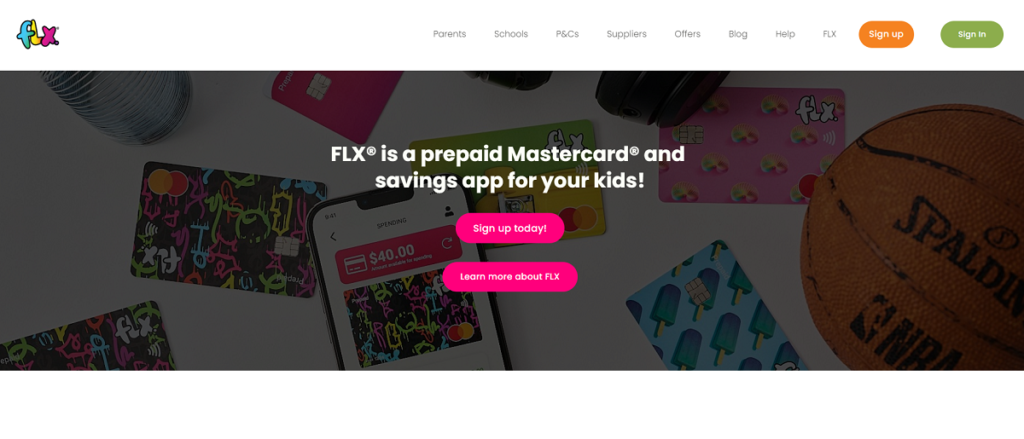
FLX is a prepaid card and account for kids that helps them learn life and money lessons, as well as how to save and spend their allowance. FLX is a financial product of Flexischools.
If you aren’t familiar with them, they are Australia’s most popular school ordering platform for schools, their suppliers, but also for parents.
Kids can use the FLX Mastercard anywhere cards are accepted, but luckily, adult merchant categories are blocked.
The card is accompanied by excellent apps – one for kids, and one for parents. Kids can set their savings goals, track spending, and receive pocket money.
The parents can use the app to top up the FLX card, as well as to monitor spending, monitor spending, and add savings goals.
Payoneer

- Multi-currency accounts for businesses
- International payments
- Marketplaces and networks
- Money management
- VAT and expenses
- Capital advance for Amazon and Walmart
- Flexible withdrawal options
Payoneer was founded in 2005 and has since grown to be the world’s go-to partner for digital commerce with more than 5 million customers around the world.
It’s popular with freelancers, E-commerce sellers, content creators, digital marketers, travel entrepreneurs, and many more, mostly digital industries.
Its bread and butter is the global multi-currency account that enables you to receive funds, pay expenses, make international payments, manage your business, and even raise capital.
Digital Banks From Big Banks in Australia
Traditional banks have seen the writing on the wall. That digital banking is the way to go and that fintech companies are taking their piece of the cake.
Of course, they do offer mobile banking apps for their main accounts. However, the younger crowds are so repelled by the big banking names that they have to come up with separate brands.
The following banks can’t be considered challenger banks or neobanks because they obviously use the infrastructure and resources of their parent banks.
ANZ Plus
ANZ Plus is a digital banking app from ANZ and is completely separate to the point that you can’t see any other ANZ accounts (if you have any) in the Plus app or visit ANZ branches to get help (only in-app chat).
It looks and behaves like other neobanks in that it’s free to use, has budgeting and analytics, savings goals, financial coaches, and a high savings interest rate.
ING
ING digital bank is owned by ING Bank (Australia), a major multinational bank. As such, it has a much, much broader scope of financial products.
You can get anything from banking and savings accounts to credit cards, personal and business loans, mortgages, insurance, and more.
The bank was launched almost 30 years ago and now has more than two million customers.
ME
ME bank has been on the Australian market since 1994. It was founded by superannuation funds and became Members Equity Bank in 1999. It became part of the Bank of Queensland in July 2021 and now operates as a division of BOQ under its banking license.
It currently has more than 300,000 customers that can make use of the bank’s online savings accounts, transaction accounts, term deposits, home loans, as well as business accounts and term deposits.
ubank
ubank is a digital bank that’s owned by the National Australia Bank (NAB). It was founded in 2008. Because it’s a separate entity, it comes without monthly fees but with Spend, Save, and Share accounts. ubank now includes the former neobank 86 400, which NAB acquired in 2021.
The bank operates under NAB’s banking licence and partakes in the Australian government’s deposit guarantee scheme.
Notable Australian Digital Banks That Shut Down
First, the pandemic and then the rising inflation and interest rates have made it harder for neobanks to compete with established lenders, as it made fundraising much more difficult.
Xinja
Xinja was a popular digital bank that, unfortunately, ceased to exist in December 2020. It had to hand its licence back and return its deposit holders’ money back.
Although it got the full banking license just a year before and attracted $100 million in deposits just 19 days later, it is said that the weight of its high interest rates became too hard to maintain.
Even though it landed a large$ 433 million capital injection, it was too late for the bank as the injection was delayed due to the pandemic.
86 400
Only a couple of months after Xinja’s demise, another popular digital bank, 86 400, got sold to NAB for $ 220 million. NAB was already a minority shareholder in 86 400, so they just acquired the remaining share.
86 400 was therefore combined with NAB’s ubank and brought to it 85,000 customers and 320,000 accounts, as well as $375 million in deposits and $270 million in mortgages.
Volt
Volt is the latest neobank that collapsed, returning deposits and selling its mortgage book after not being able to raise enough funds to support its business.
This all happened in June 2022 and is a shame, as Volt was the first exclusively online bank to gain an Australian banking licence.
Benefits of Australia’s Digital Banks
We’re living in a golden age of digital-only banking because new challenger banks offer many benefits to those willing to take the leap from Australia’s big institution banks.
The benefits of digital banking usually include convenience, increased transparency, travel perks, instant P2P transfers, higher savings interest rates, and no hidden fees, as well as cashback and an easy signup process.
Still, there are plenty more benefits exclusive to each digital bank, which may help you decide which is the right bank for you.
Are Australian Digital Banks Safe?
So far, digital banks have primarily appealed to millennials whose lives are already largely integrated with technology; however, many people may still be slightly skeptical about the security of newer services.
Digital banks are at the forefront of security technology, and in many cases, they are leading the way for traditional banks to follow.
Digital banks’ hi-tech security methods can be seen in the signup process, where fingerprint scanning, voice recognition, and facial recognition are used to authenticate customer identities before approval.
They also offer instant freeze and unfreeze features that provide customers with peace of mind about their money security.
The available banks either hold an Authorized Deposit-taking Institution (ADI) license or a restricted ADI license, meaning some offer a fully-functioning current account and debit card with deposits of up to $250,000 guaranteed by the Australian government, while others are still on their way to offering a fully licensed and guaranteed account.
How to Get Started with Digital Banking in Australia
The best thing about digital-only banks is that you can apply for most online accounts in 5-10 minutes or even less. Visit your mobile bank’s website and click or tap ‘Get started’. You can also download the banking app from Google Play or Apple’s App store yourself.
To open an Australian online personal banking account, you have to be 16 years old or over, be an Australian citizen or permanent resident with an Australian residential address, and have:
- An Australian driver’s licence, birth certificate, passport or Medicare card handy (you’ll need at least one of these)
- An Australian mobile number.
More Useful Articles About Digital Banking
- Is Cash App Available in Australia and 9 Other Countries?
- List of the Biggest Digital Banks
- Venmo Doesn’t Work Internationally (Alternatives)
- Best Digital Banking Accounts in Singapore
- Best Digital-Only (Virtual) Banks in Hong Kong
- Best Digital Banks and Banking Accounts in the USA